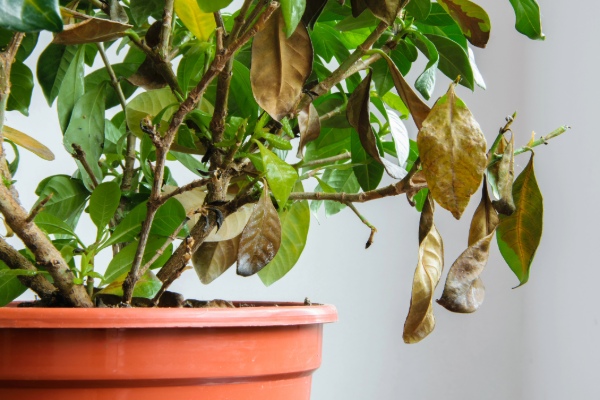
Why pots dry out so quickly
Plants in pots have a much smaller supply of soil and moisture than those growing in the ground, so they dry out much faster, especially in hot weather. A potted plant can use up available water surprisingly quickly, which means it may look perfectly healthy in the morning but start to wilt by the afternoon. When plants become stressed from heat and lack of water, they’re also more vulnerable to pests and disease, making regular watering one of the simplest ways to keep them healthy and thriving.
Water before the heat, not after
Soaking the soil ahead of time gives plants a head start, and timing matters on the day too.
- Water your pots the evening before a forecast hot day.
- Water in the early morning or evening, when less moisture evaporates before it reaches the roots.
- Expect to water more often as the temperature rises, because plants in pots often need a top-up every day.
- Give pots shorter, more frequent waterings by hand rather than one big soak a week.
The best pots for hot weather
Glazed ceramic is durable and protects roots from overheating better than plastic or fibreglass, and it loses less moisture than terracotta. The only real drawback is weight, because large containers are very heavy once filled with potting mix.
For big pots, concrete, cement or terrazzo is the other good option. These materials insulate against heat, which makes them well suited to plants from warmer climates, though they’re heavy too.
Plastic is the practical choice when you need to move pots around, for example to chase shade through the day. Lightweight fibreglass does the same job. Both protect roots less well than glazed ceramic, so they need closer watching in a heatwave.
Two materials need more care
- Terracotta is porous, so moisture escapes quickly. If you love the look, seal the inside before planting to hold moisture in for longer.
- Steel and aluminium pots are light, but they need a shady spot, so they don’t become too hot to touch.
Whatever you choose, pick a pot with drainage holes. If you love a decorative pot without them, leave the plant in its nursery pot and sit it inside the decorative one on small blocks.
Get the size right
The smaller the plant pot, the faster the potting mix dries out, because there’s less mix to hold moisture.
- Choose a pot about 4–10 cm larger than the one the plant came in.
- Go up to 15–20 cm larger for a plant that’s moving into its long-term home, and take care not to overwater at first, because the roots can’t yet use all the moisture the mix holds.
- Upgrade small containers to larger ones where you can.
Consider self-watering options
Self-watering pots have a water reservoir in the base and make it far easier to keep moisture steady.
Move them out of the harshest sun
The position of your plant pots matters as much as how often they’re watered.
- Group pots close together so neighbouring plants shade each other and the pots themselves.
- Shift pots to a spot with shade through the middle of the day or the afternoon, if they are easy to move.
- Use shade cloth to give plants some relief if there’s no naturally shaded spot.
Start with a good potting mix
Mixes carrying the Australian Standards tick on the packaging tend to hold water much better. Good quality mixes also tend to include slow-release fertiliser, wetting agents and water crystals.
Even a good mix can turn against you over time. When potting mix dries out, a waxy film forms around the particles and water simply runs off instead of soaking in. That’s why a pot can look well-watered while the roots stay dry.
- A wetting agent breaks down the waxy film and can cut the amount of watering needed by up to 50 per cent.
- Water crystals swell into a jelly-like gel that holds water and releases it to the plant over time, and they’re mixed through the potting mix at planting.
Mulch the top of the pot
Plenty of people mulch their garden beds and forget about containers. In garden soil, a layer around 6 cm thick can cut evaporation by up to 60 to 70 per cent, and a thick layer works for plant pots too.
- Sugarcane mulch is a good all-rounder for potted plants.
- Chunky bark or a layer of pebbles suits breezy spots where lighter mulch blows away.
- Coarse mulch is the better choice because soft, fine mulches can lose more moisture than bare soil.
- Keep the mulch clear of the stem.
Add liquid seaweed
Liquid seaweed is a cheap extra that suits hot weather. Applying it every fortnight helps strengthen plant cells and reduce the impact of heat stress. It also helps plants cope with temperature swings and take up water and nutrients more effectively.
Going away
A few days away in hot weather is manageable with some preparation:
- Water the pots thoroughly before you leave
- Apply a wetting agent and liquid seaweed
- Mulch thickly
- Add shade cloth over young or tender plants for extra protection
Sources:
Water Corporation - Your 5-step checklist to nail a waterwise garden
Water Corporation - Waterwise garden hub
Water Corporation - Waterwise plants