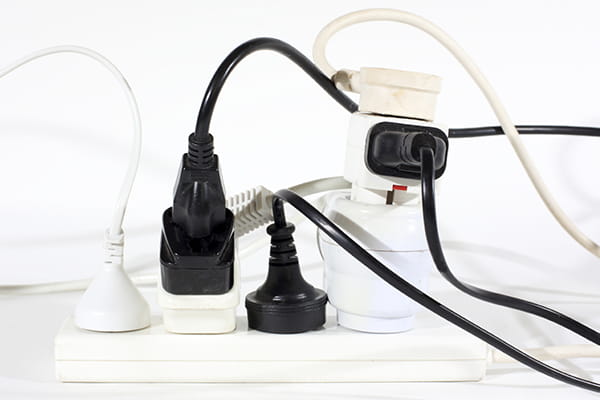
Problems can include:
- Plugging high-power appliances such as kettles, toasters and portable heaters into power boards. These appliances should be plugged directly into a wall power point.
- Overloading power boards by using double adaptors or plugging too many devices into the same board. Every power board has a maximum current rating that must not be exceeded.
- Plugging one power board into another power board or extension lead.
- Using damaged, dirty or wet power boards.
- Covering power boards or placing them where heat cannot dissipate properly.
If you use a power board, remember to:
- Choose quality power boards with overload protection or an inbuilt circuit breaker.
- Follow the manufacturer’s maximum load rating.
- Provide adequate ventilation around the power board.
- Keep power boards away from water and damp areas.
- Regularly inspect cords, plugs and outlets for signs of damage, overheating or discolouration.
- Replace damaged power boards immediately.
If you’re constantly running out of places to plug things in, it may be time to consider a more permanent solution. A licensed electrician can upgrade single outlets to doubles or quads or install additional power points around your home.
This is some text inside of a div block.