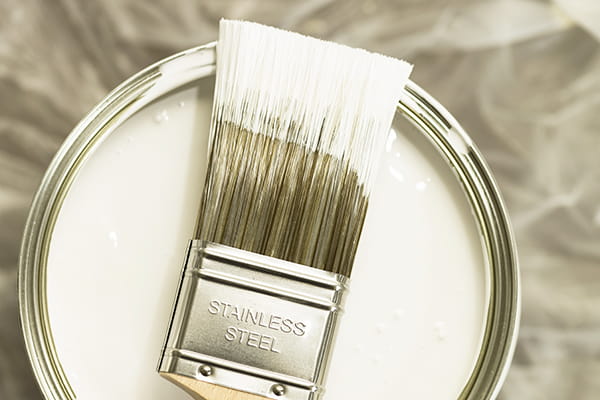
The sheen of a paint refers to how much light it reflects once it has dried. Generally, paints with a higher sheen are usually more resistant to stains, moisture and wear, and are easier to clean than lower-sheen finishes. However, durability also depends on the quality and formulation of the paint.
Sheen can also affect how a colour appears. Matte finishes absorb more light, which can make colours look softer and slightly deeper. Glossier finishes reflect more light, which can make colours appear brighter. The paint colour itself doesn't change, but its appearance can vary depending on the sheen level and lighting conditions.
Here are the different sheen levels and where they're most used:
Matte (flat finish)
- Very low light reflection with a soft, velvety appearance
- Helps disguise minor surface imperfections
- Generally, less resistant to scuffs and marks than higher-sheen finishes
- Commonly used on walls, ceilings and cornices
- Creates a contemporary, non-reflective look
Low sheen
- Subtle, low-reflective finish
- Popular choice for interior walls
- More washable and durable than matte paint
- Helps reduce glare while still providing a slight lustre
- Suitable for most living areas, bedrooms and hallways
Semi-gloss
- Noticeably reflective finish
- More durable and easier to clean than low-sheen paint
- Suitable for high-traffic and high-moisture areas
- Commonly used on doors, trims, skirting boards and cabinetry
- Can highlight surface imperfections if preparation is poor
Gloss
- Highly reflective finish
- Extremely durable and easy to clean
- Highlights details and architectural features
- Commonly used on doors, window frames, trims and other woodwork
- More likely to show surface imperfections than lower-sheen finishes
Low gloss
- Moderate sheen level between low sheen and full gloss (where available)
- Durable and easy to maintain
- Provides a softer look than full gloss
- Commonly used on doors, trims, skirting boards and window frames
- May help conceal minor imperfections better than high-gloss finishes
Keep in mind that paint manufacturers sometimes use different names for similar sheen levels, and some brands may not offer every sheen category. If you're unsure which finish is best for your project, speak with a painting professional before making your choice.