The key is choosing a climber that suits your garden, because different varieties have different growth habits, sizes and care needs. Here are a few options that suit many local gardens, and are commonly available at local garden centres.
Native wisteria
Hardenbergia comptoniana, also known as native wisteria, puts on a spectacular display in winter and spring, with cascades of blue-purple (and sometimes white) flowers. Outside of flowering season, its glossy dark green foliage provides an attractive backdrop.
It naturally grows in sandy soils and with the right support, it can establish well and provide good coverage over time. Give it a sunny to partly shaded position, something sturdy to climb on and a light trim after flowering to keep it looking its best.
Happy wanderer
If you're looking for something a little more manageable, Hardenbergia violacea (including the popular 'Happy Wanderer' variety) is a great option.
This hardy climber produces masses of violet-purple flowers through winter and spring and works well on smaller trellises, fences and pergolas. It tolerates a range of soil types as long as drainage is reasonable and does best in a sunny position.
Snake vine
Hibbertia scandens is an easy-going climber with cheerful yellow flowers that appear throughout spring and summer. Each flower won't last long, but new blooms continue to appear, creating a lasting display.
It handles sandy soils well and can be pruned to suit different spaces, making it a good choice for smaller structures, low walls or areas that need some extra greenery without a lot of maintenance.
Bower vine
Pandorea jasminoides, or bower vine, is popular for its trumpet-shaped flowers, usually in shades of pink with a deeper coloured centre - and as a bonus, the glossy foliage also looks attractive when the plant isn't flowering.
It grows well in full sun or part shade and prefers soil with good drainage. It's a versatile choice for fences, pergolas and other garden structures where you want greenery and flowers over a long period.
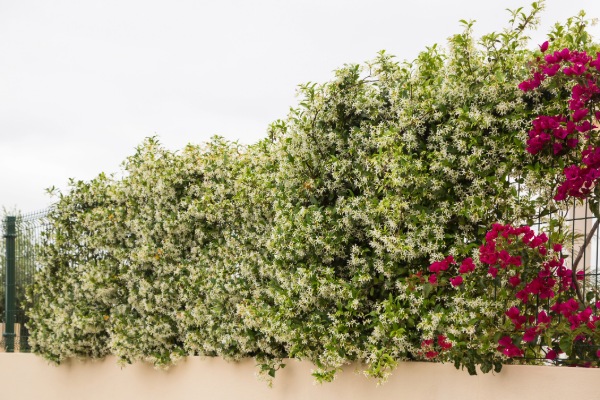
Star jasmine
Its white, star-shaped flowers are beautifully fragrant through late spring and summer, and the glossy foliage can take on bronze tones in cooler months.
It can take a little time to establish but the wait is worth it. It prefers a warm position with good drainage.
Getting started
- Give climbers something to grow on from the beginning. Trellis, wire or a sturdy support will help guide them as they establish.
- Water deeply and regularly during the first year while roots are developing, then reduce watering once the plant is established.
- Check the mature size before planting, especially with vigorous varieties, so you choose the right plant for the space.
- Prune after flowering to maintain shape and encourage healthy growth.
- Match the plant to the location - some varieties tolerate shade, while others flower best with plenty of sun.
Note: Some plants can behave differently depending on location and conditions. While some plants are well suited to home gardens, some can spread beyond the garden. If your property is near bushland or waterways, check local council or gardening advice before planting.