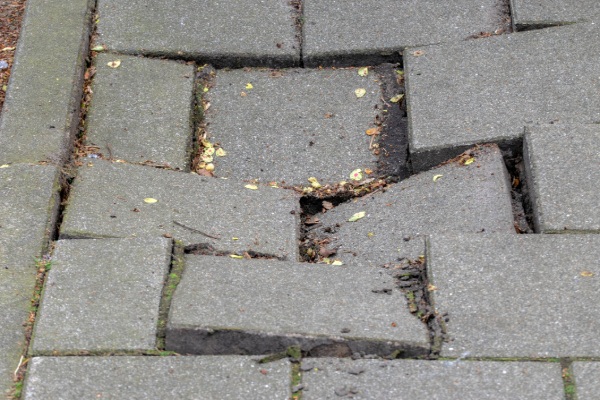
Sinking pavers can happen for a few common reasons.
Poor preparation
The base layer under your pavers is a big deal. If pavers are laid straight onto bare soil, they’re far more likely to shift, sink, or become uneven over time. A solid, level base made from properly compacted sand or gravel helps keep everything stable and sitting where it should.
Inadequate compaction
Even with the right materials, the sand layer needs to be compacted properly before the pavers go down. If it isn’t, the sand can settle gradually – and once that happens, the pavers start to drop and the surface becomes uneven.
Poor drainage
Water is one of the biggest culprits when it comes to sinking paving. If the area doesn’t drain properly, water can wash away the ground underneath and leave gaps for pavers to sink into. This is especially common under downpipes when there’s no soakwell installed. Soakwells help water soak away safely without causing damage to the surrounding paving.
Ants
If you’re spotting little piles of sand around your sunken pavers, ants may be the problem. They can shift sand from underneath the paving, creating hollow spots that cause pavers to dip. The ants need to be dealt with before repairs are done – otherwise, the sinking is likely to return.
Don’t leave it too long
Sinking pavers should be fixed sooner rather than later. They can become a trip hazard and lead to serious injury, and the longer the problem is left, the worse it can get. It’s always easier to sort out a small paving issue now than a much bigger one later.