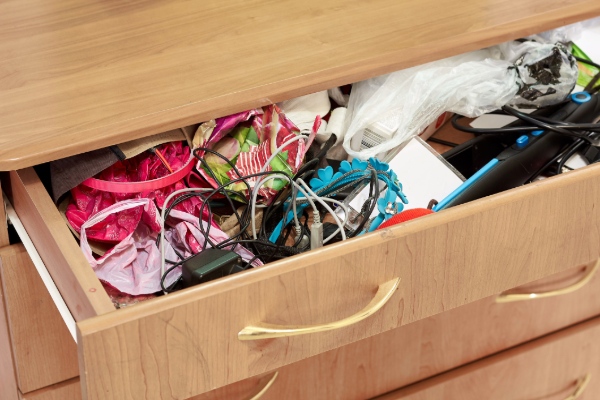
The usual way to declutter often goes like this:
- Pull everything out
- Touch every item
- Make a decision on every item
- Get tired halfway through
- Abandon the idea
- Find yourself left with a big mess to clean up!
Reverse decluttering flips it:
- Pick a space (a drawer, shelf, cupboard) and empty it
- Put back the items you use and like most
- Stop when the space is full
- Anything that didn't make it back in is what you don't really need
The biggest difference is you're not debating over every object. You're simply choosing your best and most useful items first.
Why it feels so much easier
Reverse decluttering can be a lot less draining because:
- You make fewer decisions
- You don't get stuck in "but what if" thinking
- You don't spend ages sorting things you don't even like
- You can stop once the space looks good
It's also great if you're someone who gets overwhelmed once everything is out and the room looks like it's been hit by a small tornado.
The benefits of reverse decluttering
It's quicker
You spend your time putting away what you want, instead of arguing with yourself about what you should throw out.
It helps you avoid overstuffed spaces
Because you're filling a space with only the best items, drawers and cupboards stop being jam-packed.
It makes duplicates obvious
When you only put back the things you want or need, you suddenly realise how many extras you've been keeping for no good reason.
It's easier to keep tidy afterwards
Once your spaces aren't bursting at the seams, putting things away becomes simpler. And when things are easy to put away, they're more likely to stay tidy.
How to try reverse decluttering
Start small so it doesn't feel like a whole-house project.
You could start with:
- A bathroom drawer
- Your coffee mug cupboard
- A shelf in the pantry
- A section of your wardrobe
- The junk drawer (if you're feeling brave!)
A simpler way
Reverse decluttering is perfect if you want a cleaner space without turning your whole house upside down. It's practical, it's faster, and you don't need to overthink every item you own.
You're not trying to make perfect decisions. You're just putting your best stuff where it belongs and letting the rest move on.
And if you're really not sure about an item, try the following guide: if it costs less than $20 or 20 minutes to replace, let it go!