How insurers work out what you pay
When you take out home insurance, you'll usually answer a couple of security questions:
- Do you have deadlocks fitted?
- Is there an alarm system?
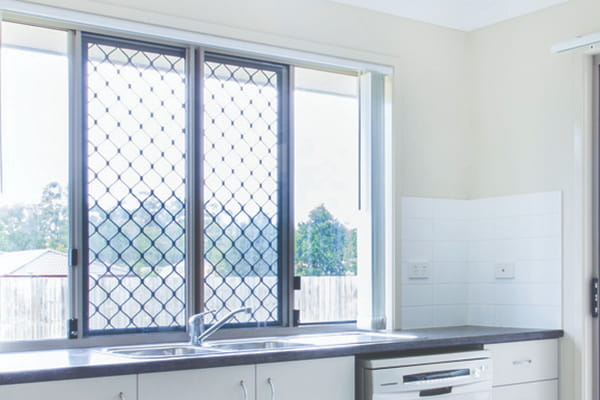
- Are there security screens on your doors and windows?
Your answers help determine how much of a risk your home is seen to be.
Some providers will knock up to 15% off your premium just for having compliant security screens in place across doors and windows. The size of the discount varies between insurers, so it pays to call yours and compare.
Not every screen counts as a "security" screen
A screen can't legally be marketed as a security screen, whether it's fitted to a door or a window, unless it's been put through testing and is shown to meet Australian Standard AS 5039. That covers several checks:
- A knife test, confirming it can't be cut through.
- An impact test, simulating someone kicking or forcing it in.
- An anti-jemmy test, confirming it can't be prised open.
- A pull test, confirming it can't be ripped off.
- A probe test, confirming a hand can't be jammed through a gap.
When choosing security screens, ask to see the label confirming they've been manufactured to this standard, and check the rating is current. Requirements were tightened in 2023 under a new classification called Security Level 200, which doubles the impact force a screen must withstand.
Manufacturing quality only gets you halfway there. Doors and windows both need to be correctly installed, so always use a licensed installer who follows the AS 5039 installation requirements. Even the best hardware on the market can underperform if it isn't fitted properly.
How burglars often get in
- Around two thirds gain access through an unlocked door or window, so securing every entry point, not just the front door, makes the biggest difference.
- Genuine security doors and window screens are a real deterrent, since intruders prefer an easy target and tend to steer clear of a well-secured home.
- Quality screens physically prevent forced entry, smashed windows or picked locks.
- Checking your doors, windows and installation all meet Australian Standards makes a real difference.
Keeping the paperwork in order
Once everything's in place, hold onto the labels and invoices for both your doors and your window screens. Insurers sometimes ask for proof when you take out or renew a policy, so having it ready saves a scramble later.
It's also worth reviewing your policy every year or so. Insurers adjust their discount criteria from time to time, and an upgrade from a while back might not be reflected in your premium unless you mention it.
Sources: Australian Institute of Criminology, National Security Screen Association