Sweet foods and crumbs
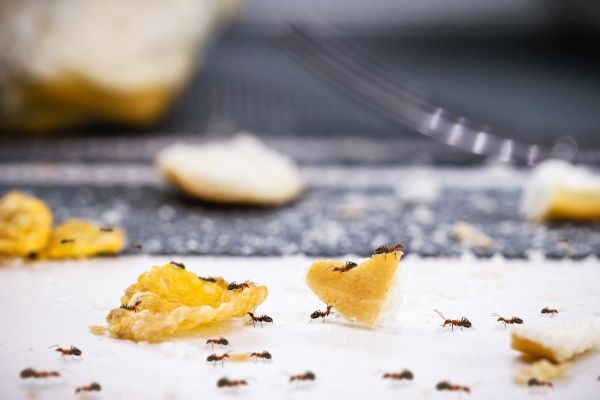
If there’s one thing ants excel at, it’s finding food. A few crumbs under the toaster, a sticky splash of juice on the bench or an unsealed packet of biscuits can be all it takes to attract a scouting ant.
Once an ant discovers a food source, it leaves behind a scent trail that helps other ants find their way to the feast. Before long, a single ant can turn into a steady procession.
Keeping kitchen surfaces clean, vacuuming regularly and storing food in sealed containers can go a long way towards reducing the appeal of your home.
Pet food and water bowls
Your pets’ dinner could also be attracting unwanted visitors. Ants are drawn to both pet food and water, particularly during warmer months when they’re actively searching for resources.
Avoid leaving pet food out for long periods and clean up any leftovers as soon as possible. Washing food bowls regularly and keeping feeding areas clean can help prevent ants from moving in.
Moisture and leaks
Food isn’t the only thing ants are looking for. Many species are also attracted to water and damp conditions.
Leaking taps, dripping pipes, damp cupboards and even condensation around windows can provide a reliable source of moisture. Some ants may even establish nests near these areas if conditions are favourable.
Regularly checking for leaks and addressing moisture problems can make your home much less inviting.
Unsealed entry points
Ants don’t need a wide-open door to get inside. Tiny cracks in walls, gaps around windows and spaces under doors can provide easy access.
Once ants identify a reliable source of food or water, they’ll often return using the same route. Taking the time to seal cracks and gaps can help stop them before they become a problem.
Gardens that touch the house
Sometimes the path to your kitchen starts in the garden. Trees, shrubs and climbing plants that touch your home can act as bridges for ants, giving them easy access to walls, roofs and windows.
Keeping vegetation trimmed back from the house can reduce the chances of ants finding their way indoors and may also help you spot potential entry points more easily.
Overflowing rubbish bins
Food scraps, sticky packaging and sweet-smelling leftovers can make rubbish bins particularly attractive to ants.
Bins should be emptied regularly, fitted with secure lids and cleaned when necessary to remove food residue. Recycling bins can also attract ants if containers haven’t been rinsed before disposal.
Pantry staples
Many people assume ants are only interested in sugary foods, but they can also be attracted to pantry staples such as flour, cereal, rice and pet treats.
Storing dry goods in airtight containers not only keeps them fresher for longer but also makes them harder for ants to access.
What to do if ants have already moved in
If you’ve discovered a trail of ants, the first step is to identify where they’re coming from and what they’re targeting.
Clean any food spills, remove accessible food sources and wipe down surfaces to help eliminate scent trails. Sealing entry points can also prevent more ants from entering.
While sprays may kill the ants you can see, they often don’t address the colony itself. Ant baits can be more effective because worker ants carry the bait back to the nest, helping eliminate the problem at its source.
If the infestation is large or keeps returning, it may be worth contacting a pest control professional.
Prevention is the best solution
When it comes to ants, prevention is usually easier than treatment. Keeping your home clean, storing food properly, fixing leaks and sealing entry points can significantly reduce the chances of an infestation.
A few simple habits can make your home far less attractive to ants and help ensure these tiny visitors stay where they belong — outside.