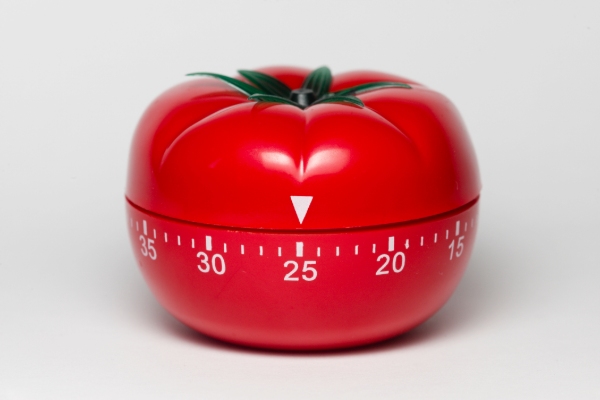
You choose one task, work on it for a set amount of time - traditionally 25 minutes - then stop and take a short break. Each focused session is called a pomodoro.
Rather than trying to stay productive all day, it asks you to focus properly for a short time, then rest.
How it came about
The technique was developed in the late 1980s by Francesco Cirillo, who used a tomato-shaped kitchen timer (hence the name - from the Italian word for 'tomato') to help himself concentrate while studying. By committing to just 25 minutes at a time, he found it easier to focus and far less exhausting than long, unfocused sessions. The idea stuck, and it soon became clear it worked for many parts of everyday life.
Why it works for so many different tasks
Many tasks feel overwhelming because they're open-ended. Cleaning, planning, learning, organising and creating can easily stretch on with no clear finish. The Pomodoro Technique adds a gentle boundary. You decide how long you'll focus, making starting easier and stopping guilt-free.
How to use it
Using the Pomodoro Technique is simple, even on busy days (or those that are a bit all over the place).
- Choose one task you want to work on
- Set a timer for 25 minutes - or less if that feels more realistic
- Work on that task only until the timer ends
- Stop when it rings and take a five-minute break
- After four pomodoros, take a longer break of 15 to 30 minutes
You can repeat this cycle as many times as you like or stop after one or two rounds if that's all your energy allows.
What you can use it for
This works for almost anything that benefits from focused attention.
- Life admin such as emails, bills, forms, bookings and phone calls
- Work tasks including planning, writing, reports and prep
- Creative projects like writing, designing, crafting or brainstorming projects you've been avoiding
- Studying, reading or learning new skills
- Meal planning and prep
- Gardening and outdoor tidy-ups
- Digital tasks like sorting photos, files, apps and inboxes
- Fitness and wellbeing habits such as stretching, yoga or gentle exercise
- Housework
- Errands and long to-do lists
If it's a task you tend to delay, overthink or stretch out, it's a good candidate.
Tips to make it work better
A few small tweaks can make the technique more effective and easier to stick with.
- Adjust the timing to suit the task. Physical jobs often work better in shorter bursts.
- Plan your pomodoros in advance so you're not deciding what to do mid-session.
- Remove obvious distractions before starting, like silencing notifications.
- Keep a notepad nearby to jot down ideas or interruptions without stopping.
- Stop when the timer ends, even if you're mid-task. Momentum carries over next time.
Using breaks properly
Breaks are part of the technique, not a reward for finishing.
- Stand up and move around
- Change rooms or step outside
- Have a drink or stretch
- Rest your eyes from screens
Avoid starting something that's hard to stop, like scrolling endlessly or starting another task.
Why it saves time without feeling strict
Short, focused sessions reduce distraction, limit overthinking and stop tasks from expanding to fill your day. You get more done in less time, without feeling rushed or exhausted.
Even on scattered days, a few pomodoros can create a sense of progress across different areas of life.
One simple tool, endless uses
The Pomodoro Technique works because it fits real life. A few focused minutes at a time can turn busy, overwhelming days into productive, satisfying ones.