Containers with food residue or liquids
Items should be clean, dry and empty. Food residue or liquid can spoil an entire load of recycling. Greasy pizza boxes and unwashed takeaway containers should go in the general waste bin.
Items which are too small
Only recycle items which are roughly the size of your palm. Anything smaller will fall through the sorting machinery.
This includes:
- Plastic lids and bread tags
- Small pieces of foil
- Loose shredded paper
Shredded paper can go in your lime green‑lid FOGO bin in small amounts if mixed with food or garden waste – check your local council's guidance.
Aerosols
Regardless of what it says on the can, recycling facilities in WA will not take aerosol cans. They pose a huge fire and explosion risk. These are classed as household hazardous waste and can be recycled at specialist facilities.
Bagged recyclables
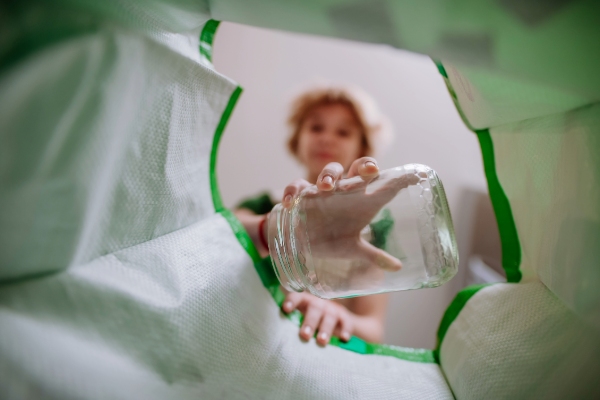
Recyclables must go in the bin loose – never in bags. Bagged items can’t be sorted and usually end up in landfill.
Soft plastics
Items like cling wrap, bread bags, chip packets and bubble wrap are no longer accepted in kerbside recycling bins. These must go in general waste as REDcycle is no longer operating.
Shredded paper
Shredded paper is simply too small to be recycled. If you have a 3‑bin system, small amounts can go into your FOGO bin (if your local council provides one), but this may change in future.
Plastic lids
Most plastic lids are too small to be processed and should go into your waste bin. Some Containers for Change depots may accept them when collected in bulk and some charities also collect them.
Biodegradable compostable items
Items labelled biodegradable and compostable cannot be recycled. They degrade and can contaminate other recycled items, leading to more unnecessary waste.
Single‑use cutlery and bamboo items
Single‑use cutlery – whether wooden or bamboo – is not recyclable (plastic single‑use cutlery was banned in 2022). Some councils allow bamboo skewers or cutlery in the FOGO bin, but they’re not a priority feedstock and may be excluded in the future, so you should always check the RecycleRight website for your particular bin system.
Aluminium foil and lids
Aluminium foil can be recycled if it’s clean and scrunched into a ball which is at least 5 cm wide. Loose foil pieces and small aluminium lids should go in general waste unless bundled securely inside a larger aluminium container.
Cleaning product containers
Plastic cleaning product containers can be recycled if fully rinsed and free of any hazardous residue. Containers with hazard labels or leftover chemicals should be taken to a hazardous waste drop‑off site.
Ceramics and crockery
These are not recyclable in your kerbside bin; this includes mugs, plates, ceramic floor and wall tiles and drinking glasses. Place them in your general waste bin or donate if still usable and in good condition.
Long‑life cartons
Long‑life/shelf‑stable cartons (which are often used for milk or juice) contain mixed materials and are not accepted in most WA kerbside bins. These should go in your general waste bin.
Greaseproof paper and waxed cardboard
Greaseproof and baking paper cannot be recycled. Waxed cardboard may be recyclable if clean – check with your council. Soiled or food‑stained cardboard goes into your general waste bin.
Plastic meat trays
Plastic meat trays are not accepted in any of your recycling bins because of the contamination risk from raw meat residue. Even if rinsed, they can still harbour bacteria and cause hygiene issues in the recycling stream. Place these trays in general waste.
These are the most frequent and harmful items found in recycling bins:
- Greasy pizza boxes
- Soft plastics
- Nappies
- E‑waste and batteries
- Crockery and ceramics
- Clothing and textiles
- Food scraps
- Tissues and paper towels
- Gas bottles, paint tins and other hazardous materials