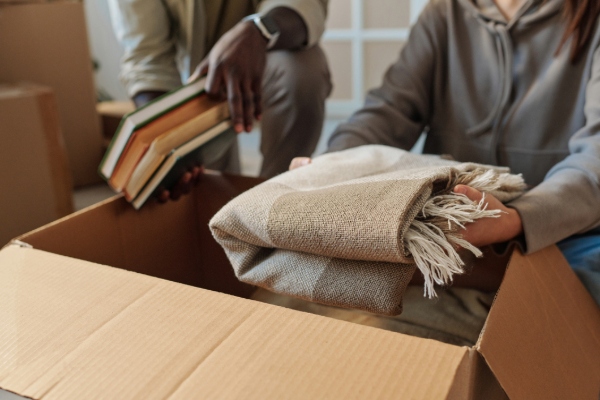
Start earlier than you think you need to
One of the simplest ways to reduce stress is to give yourself more time than you think is necessary. Packing always takes longer than expected, especially once you realise how many items are tucked into drawers and cupboards. Begin with non-essential items a few weeks in advance, such as seasonal clothes, books, and decorative pieces. This creates a buffer so you're not racing against the clock in the last few days.
Declutter before you pack!
There's no better motivation for a good clear-out than the thought of carrying unnecessary items into a brand-new space. As you pack, try sorting your belongings into three categories: keep, donate, and discard. It's surprisingly freeing to let go of things you no longer need, and it means fewer boxes to move, unpack, and find space for later.
Pack by room
Keep everything from one space together and label it clearly. When you arrive at your new home, each box can go straight to its allocated room. It turns the unpacking process into a series of small, manageable steps.
Label clearly and consistently
Write a brief description of contents on the box. The extra minute spent labelling will save you from lots of rummaging later.
Keep an essentials box within reach
After a long moving day, the last thing you want is to dig through several boxes just to find a toothbrush or a phone charger. Pack a clearly marked essentials box with items you'll need immediately, such as toiletries, important documents, medications, basic kitchen supplies, and chargers.
Use what you already have
There's no need to invest in endless packing materials when your home is already full of useful resources. Suitcases are perfect for heavy items like books, towels can wrap fragile objects, and clothing can cushion delicate items just as effectively as packing paper. This not only saves money but also reduces waste and can speed up the packing process.
Don't overpack boxes
It can be tempting to fill every box to the brim, but overly heavy boxes are difficult to carry and more likely to break. Aim for a balance between weight and volume.
Take photos before disconnecting things
Cables, electronics, and complex setups can quickly become confusing once dismantled. Snapping a quick photo of how everything is connected before you dismantle it makes reassembly much easier in your new home. This is particularly useful for televisions, routers and office setups where multiple cords are involved.