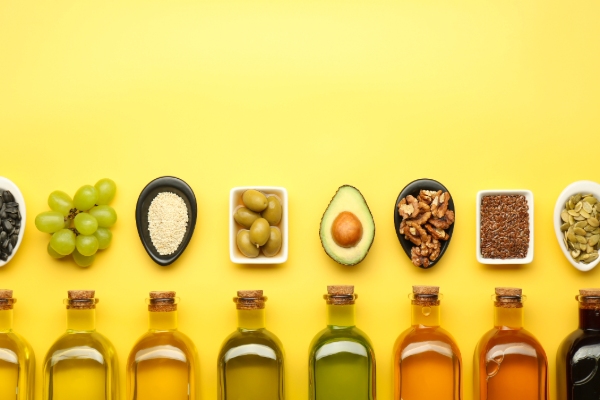
Here's a quick guide to the most common cooking oils, and what they're most commonly used for.
First, what makes them different?
Cooking oils vary based on:
- Flavour – some are mild, others are strong and distinctive
- Smoke point – the temperature where an oil starts to smoke and break down
- Fat type – oils contain different amounts of saturated, monounsaturated and polyunsaturated fats
- Processing – extra virgin oils are less processed than refined oils
Generally, oils higher in unsaturated fats are considered a better everyday choice than oils high in saturated fats.
Extra virgin olive oil (EVOO)
Best for:
- Salad dressings
- Drizzling over roasted veggies, soups and pasta
- Dips and marinades
- Low to medium heat cooking
Rich, fruity, sometimes peppery, EVOO is high in monounsaturated fats and contains antioxidants. It's often considered one of the best all-round oils for everyday use.
Olive oil
This one is usually labelled as "olive oil" rather than "extra virgin". It's more refined, which means it has a higher smoke point and a milder flavour.
Best for:
- Roasting vegetables
- Pan-frying
- Cooking savoury dishes where you don't want a strong olive taste
Canola oil
Affordable and popular because it has a neutral flavour, is versatile, and works in almost everything, including:
- Baking (cakes, muffins, slices)
- Stir-frying
- Roasting
- Pancakes and fritters
Canola is low in saturated fat and contains polyunsaturated fats, including omega-3 fats.
Sunflower oil
Often used when people want a clean, mild flavour and good browning.
Best for:
- Shallow frying
- Roasting potatoes
- Cooking anything you want crisp
Sunflower oil is higher in polyunsaturated fats. It's fine in moderation, but it's not usually considered the top "everyday" oil compared to olive oil.
Vegetable oil
Vegetable oil is usually a blend (often soybean, canola, or sunflower). It's commonly used in basic baking and everyday cooking when flavour doesn't matter.
Because it's a blend, the nutrition profile varies. It's not the worst option, but if you're choosing one main oil for daily use, olive or canola are often better picks.
Rice bran oil
Rice bran oil has become a bit of a favourite for people who cook at higher temperatures.
It has a mild flavour and is best for:
- Stir-frying
- High heat cooking
- Roasting
- Homemade chips or fried foods
Rice bran oil contains a mix of fats and is relatively stable at high temperatures.
Avocado oil
Popular for its mild taste and high smoke point, but it can be expensive.
Best for:
- High heat cooking
- Roasting
- Grilling
- Salad dressings when you want a buttery feel
It has a mild, slightly buttery taste and is high in monounsaturated fats, similar to olive oil.
Coconut oil
Coconut oil has a strong fan base, especially for baking and curries. But it's one to use with a bit of awareness.
Best for:
- Curries
- Baking (especially when you want a coconut flavour)
- Toasting spices
- Some desserts and slices
Coconutty in flavour (unless it's refined, in which case the flavour is more neutral).
It's important to be aware that coconut oil is high in saturated fat, which can raise LDL cholesterol (the type linked with heart disease risk). It's fine as an occasional oil, but it's not usually recommended for everyday cooking oil.
Grapeseed oil
Grapeseed oil is light, neutral and great for:
- Salad dressings
- Mayonnaise
- Light sautéing
- Baking
It's high in polyunsaturated fats and is best used in moderation as part of a mix of oils.
Peanut oil – best for stir-fries and Asian-style cooking
Peanut oil has a great flavour and performs well at higher heat. It's commonly used for:
- Stir-fries
- Noodle dishes
- Shallow frying
- Satay-style cooking
Peanut oil contains a good mix of fats, but it's obviously not suitable for anyone with peanut allergies.
Sesame oil
Sesame oil is more of a flavour booster than an everyday cooking oil.
Best for:
- Drizzling over stir-fries
- Dressings and dipping sauces
- Finishing noodles, dumplings and rice dishes
It has a strong, nutty flavour and is usually used in small amounts, so its health impact is minimal compared to your main cooking oils. A little goes a long way. If you use too much, it can overpower a dish quickly.
Oil storage
Cooking oils don't last forever. They can become rancid, especially if stored near heat or sunlight.
To keep oils fresh:
- Store them in a cool, dark cupboard
- Keep lids tightly sealed
- Buy smaller bottles if you don't cook often
- Avoid storing oils next to the stove long-term
How to dispose of used cooking oil
Source: heartfoundation.org.au