-
Swap plastic razors for a reusable safety razor
A good quality safety razor can last for years. You only need to replace the blades and will create far less waste over time.
-
Choose a bamboo or replaceable-head toothbrush
Bamboo toothbrushes reduce plastic in the handle, while electric toothbrushes with replaceable heads can also cut down on waste compared with replacing the entire toothbrush.
-
Switch to refillable products
Reusing the same container multiple times is one of the simplest ways to reduce single use plastic.
-
Use a bar of soap instead of liquid handwash
Soap bars usually come with minimal packaging and often last longer than liquid alternatives. They also avoid plastic pumps, which can be difficult to recycle.
-
Try shampoo and conditioner bars
These can last just as long – if not longer – than bottled versions; and because they’re lighter and more compact, they also have a lower transport footprint.
-
Choose a shower over a bath
Aim for around three to four minutes, roughly the length of a song. Shorter showers reduce both water use and the energy needed to heat it.
-
Collect water while waiting for the shower to warm up
Place a bucket under the tap and use that water for plants, cleaning, or flushing the toilet. It’s an easy way to make use of water that would otherwise go straight down the drain.
-
Turn off the tap when you don’t need it
You don’t need to leave the tap running when brushing your teeth or washing your hands. This simple habit can save a significant amount of water over the course of a year.
-
Fix leaks promptly
A dripping tap or leaking toilet can waste a surprising amount of water over time, even if it seems minor at first. Fixing leaks early prevents ongoing water loss.
-
Install water-saving fixtures
Lowflow showerheads and tap aerators reduce water use without making much difference to pressure or comfort.
Shower curtains – PVC versus polyester
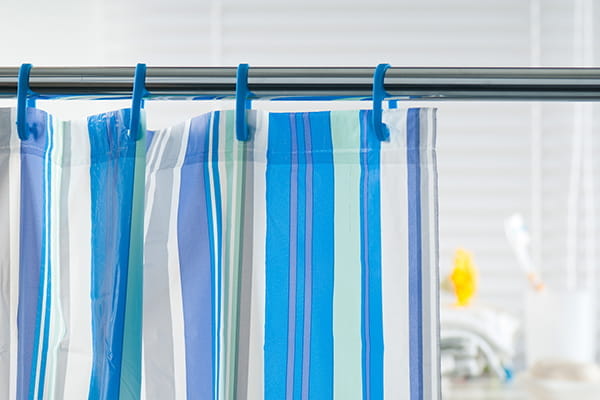
Shower curtains are practical and affordable, but the material they’re made from matters more than you might think. Many standard curtains are made from PVC (vinyl). While they’re waterproof, PVC typically has a higher environmental impact during production and disposal, and some curtains can release strong chemical odours when new. If you plan to use a curtain, polyester is generally a better option. It’s still a form of plastic, but it tends to have a lower environmental impact than PVC and can be machine washed to extend its life.
Glass shower screens
For a longer-term solution, a glass shower screen or door is worth considering. While it has a higher upfront footprint, it can last for decades and doesn’t need regular replacement, making it a more sustainable option over time.
Making just a few of these changes can add up, and once they become part of your routine, they’re easy to stick with.