The rotten egg smell
Natural gas has no smell in its raw state. Before it reaches homes, an odorant is added specifically so a leak can be detected by smell, and it's commonly described as a rotten egg or sulphur-like odour.
- Any persistent rotten egg smell in or around the home is worth treating seriously.
- The smell can be strongest near appliances, pipework or the meter box, but may also drift through the house.
- Don't wait to see if it fades before acting.
A hissing sound
Gas escaping from a small opening, such as a loose fitting or damaged pipe, can produce a steady hissing noise.
- The sound is often most noticeable near an appliance connection or along exposed pipework.
- A hissing noise combined with a gas smell is a strong indicator of a leak rather than a false alarm.
A gas flame that isn't blue
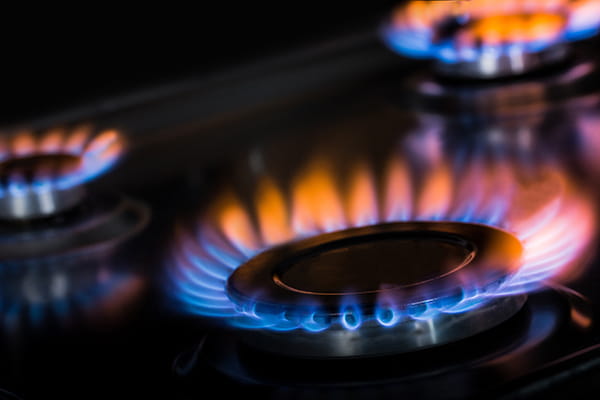
A healthy gas flame burns blue with a small, well-defined inner cone.
- A yellow, orange or red flame can indicate incomplete combustion, which may point to a fault in the appliance or a leak.
- It can also mean the burner is dirty and simply needs cleaning.
- Either way, an appliance with a flame that isn't burning blue is worth having checked.
An unexplained rise in your gas bill
A slow leak can waste gas gradually without any other obvious symptoms.
- A noticeable rise in your gas bill, without a change in how much gas you're actually using, is worth investigating.
- On its own it isn't proof of a leak, but alongside a smell, sound or flame issue it's a reasonable prompt to get the system checked.
What to do if you suspect a gas leak
Western Australia's gas safety guidance sets out a specific sequence to follow, and it differs from generic advice in a few important ways, so it's worth following exactly.
- Turn off the gas supply at the meter or cylinder, keeping in mind this may not stop a leak coming from a nearby main or service line.
- Evacuate the building if you consider it necessary.
- Remove ignition risks: no naked flames, no smoking, no matches or lighters, and don't touch any electrical switches. If lights are already on, leave them on rather than switching them off.
- Ventilate the building by opening all doors and windows.
- Do not re-enter the area until it's confirmed safe.
Who to contact
- For a suspected leak from the gas meter, network pipework or an appliance, call ATCO, the gas network operator for Western Australia, on 13 13 52 (available 24 hours).
- To report a gas safety incident, including near-misses, injuries or property damage, Building and Energy can be contacted on 1800 678 198 (freecall, all hours).
- Any repair work must be carried out by a licensed gas fitter; this is a legal requirement in Western Australia, not just a safety recommendation.
If the warning signs point to trouble, it's also worth checking for signs of faulty electrical wiring while you're assessing home safety.
Sources: Government of Western Australia- Gas safety at home;
ATCO – Report a gas leak (ATCO gas network contact)