What it’s really costing you
Fresh fruit and vegetables make up around a third of what Australian households throw away, based on the National Food Waste Strategy Feasibility Study. With average household food waste sitting between $2,000 and $2,500 a year, that puts the fruit and veg share at roughly $650 to $825 annually. This is a rough estimate based on national averages rather than an exact household figure, but it gives a snapshot of what’s going in the bin each year.
Here are a few ways to avoid wasting your hard-earned money.
Smarter shopping
- Buy only what you’ll use - shop with a list built around meals you’ve planned.
- Buy loose produce instead of pre-packed bags, so you can grab exactly the amount you need.
- Buy vegetables, such as tomatoes, before they are ripe to eat later in the week.
- Steer clear of vegetables that are bruised or damaged.
- Top up on perishables like leafy greens and berries more often in smaller amounts, rather than one big weekly haul that might go off before you get to it.
- Grow your own herbs - only grow the ones you will use, or they will go to waste.
Store things properly
- Wrap leafy greens loosely in a damp tea towel to keep them crisp for longer.
- Keep herbs standing in a glass of water on the bench, the same way you’d treat flowers.
- Store potatoes and onions away from each other, in a cool, dark spot. Kept together, they’ll spoil faster.
- Wrap celery and broccoli in aluminium foil and store in the fridge.
- Tear up (don't cut) a whole lettuce and store in a glass jar with a folded piece of kitchen paper at the bottom. This will last for up to 10 days. Wash just before using.
Fridge tips
- Put the oldest produce at the front so it gets used first.
- Keep a small “use it up” section in the fridge, so it doesn’t get lost behind newer items.
- Check the crisper drawer humidity settings if your fridge has them, since the wrong setting can dry out or overly moisten produce.
Get ahead of spoilage
- Freeze fruit before it turns, ready for smoothies, baking or crumbles.
- Blanch and freeze vegetables that are on their way out, rather than letting them go to waste.
- Turn wilting veggies into soup, stir-fries or a frittata before they’re beyond saving.
- Batch cook and freeze portions for those nights when you don’t feel like cooking.
- Revive limp greens, or root vegetables that have lost some firmness, by soaking them for about half an hour in iced water.
Don't throw away those leftovers!
- Love daily smoothies? Chop and divide any leftover veg, add some fruit, and freeze in individual bags to make smoothie packs. Just tip the bagful in the blender, add your liquid and blend!
- Turn overripe tomatoes into home-made tomato sauce for pasta.
- Save veg tops and peels for making vegetable stock - you can freeze them until you are ready use them.
- Chop up any herbs, chillies or garlic and freeze with oil or butter in an ice cube tray for use later.
- Rather than peeling vegetables such as potatoes, carrots, and beetroot, give them a good scrub and use the whole thing, then there is no waste.
Rethink ‘ugly’ produce
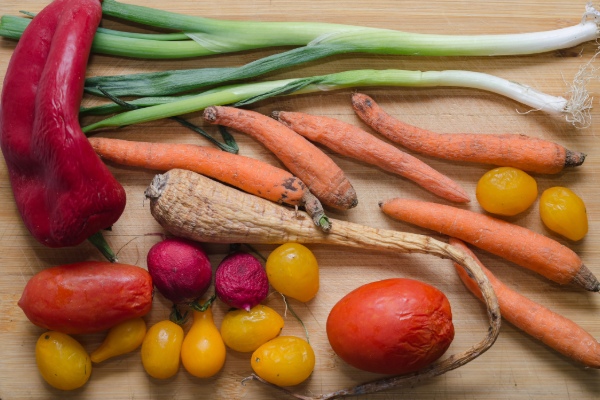
Odd-shaped carrots and slightly bruised apples taste the same as their picture-perfect counterparts. Many greengrocers and some supermarkets now sell “imperfect” produce at a discount, which is worth seeking out if you’re trying to stretch the budget further.
Compost what you can’t save
Not everything can be rescued, and that’s fine. Composting scraps instead of binning them keeps them out of landfill and turns them into something useful for the garden instead.
Cutting fruit and veggie waste isn’t about a total kitchen overhaul. A few small, consistent habits are enough to reduce what ends up in the bin and keep a decent chunk of money in your pocket instead.
Source: DCCEEW - National Food Waste Strategy Feasibility Study