The main types
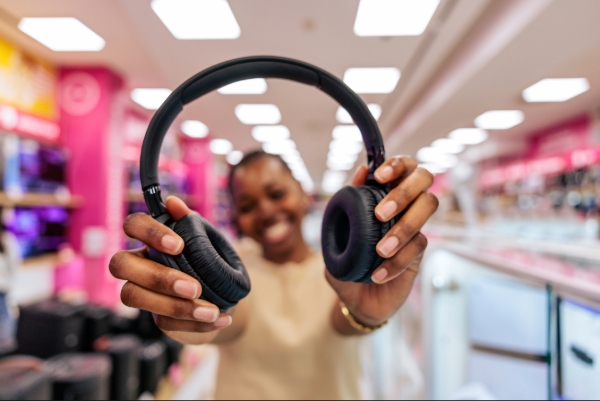
- Over-ear headphones fully cover your ears with padded cups. They're usually the most comfortable for long stretches and tend to have the best sound, but they're bulky to carry and not great for exercise.
- On-ear headphones sit directly on your ears rather than around them. They're smaller and lighter to carry, but some people find them uncomfortable after an hour or two since they press on the ear rather than surrounding it.
- Earbuds sit in or just inside your ear canal. They're the smallest and most portable option, easy to slip in a pocket, but comfort and sound quality depend on getting the right fit.
None of these is better than the others. It really comes down to how and where you'll use them.
Noise cancelling
Noise cancelling headphones listen to the sound around you and cancel a lot of it out before it reaches your ears. It works well on steady background noise, like an engine hum, air conditioning or the general drone of a plane cabin. It's much less effective on sudden noises, like someone talking nearby or a dog barking.
If you mostly listen at home, noise cancelling might not add much. If you commute, travel a lot or work somewhere noisy, it can make a real difference, regardless of which type you choose.
Fit matters more than people expect
A pair of headphones can sound great and still be the wrong choice if they don't fit well.
- Over-ear headphones should sit comfortably around your ears without pressing on your head too tightly, and it's worth checking the padding feels soft rather than stiff.
- On-ear headphones need enough cushioning that they don't dig into your ears, since they're carrying more direct pressure.
- Earbuds rely on the right sized tip to sit snugly, so it's worth trying the small, medium and large tips that usually come in the box rather than sticking with whatever's fitted by default.
Fit isn't just about comfort
- Poorly fitted earbuds let outside noise in and let sound leak out, so music ends up thinner and quieter than it should.
- Loose, over-ear or on-ear headphones can do something similar, letting bass escape around the edges.
If a pair has never sounded quite right, checking the fit is worth doing before assuming it's the headphones themselves.
Battery life
The battery life written on the box is often based on ideal conditions, so it's worth looking a little closer before buying.
Things worth checking include:
- Whether battery life includes noise cancelling features turned on, since having it running can use up battery faster across all types.
- For earbuds, how much extra charge the carry case gives, since most cases can recharge them several times before you need a power outlet.
- How long a quick top-up lasts, since many headphones and earbuds now offer an hour or more of listening from just five to ten minutes on charge.
- Whether the battery can be replaced, since headphones with a sealed battery generally have a shorter overall lifespan.
For most people, six or more hours of listening time for earbuds, or twenty or more hours for over-ear or on-ear headphones, is enough for daily use without needing to charge them constantly.
A few other things worth a quick check
- Wired headphones plug directly into a device, so there's nothing to charge and no delay between what you're watching and what you hear, useful for gaming or video calls, and available across all three types.
- Water resistance is worth checking if you'll be wearing them while exercising or out in the rain, particularly relevant for earbuds and on-ear styles used during activity.
- Some headphones can stay connected to two devices at the same time, such as a laptop and a phone, so you're not disconnecting and reconnecting each time you switch.
There's no single "best" pair of headphones, only the best pair for how you'll use them. Thinking about where and how you'll wear them most, and which suits your lifestyle, narrows the choice down fast, long before you need to compare.