When is a dog considered 'old'?
Dogs age at different rates depending on their size. As a general guide, smaller dogs are often considered senior from around 7 years of age, while larger breeds may reach this stage earlier, sometimes from around 5–6 years.
Rather than focusing on a number alone, it helps to watch for signs of ageing such as slowing down, changes in weight, stiffness, or shifts in behaviour. These changes are often a clearer indicator that your dog may need a bit of extra care and attention.
Diet and nutrition
As dogs get older, their dietary needs can change. Providing a balanced, appropriate diet is an important part of responsible care. Your vet can help you choose food that suits your dog’s age, size and overall health.
Older dogs are often less active, so keeping an eye on their food intake can help maintain a healthy weight and support their wellbeing.
Exercise
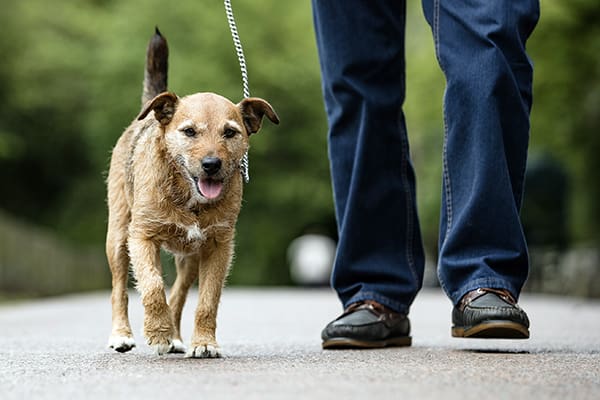
Even as dogs slow down, regular movement is still important for their health and comfort. Gentle, consistent exercise helps keep joints moving and supports overall wellbeing.
If your dog seems stiff, struggles with mobility, or tires more easily than usual, it may be time to adjust their routine. A vet can provide advice on what level of activity is suitable.
Illness
We cannot ask our dogs how they are feeling, so it is important to watch for signs that something may be wrong. Changes in behaviour or physical condition can indicate illness or discomfort. Keep an eye out for:
- Increased panting or difficulty breathing
- Vomiting
- Diarrhoea
- Changes in appetite or thirst
- Changes in urination
- 'Accidents' in the house
- Signs of pain
- Changes in behaviour, including aggression
Regular check-ups with your vet can help detect problems early and keep your dog in the best possible health.
Making life more comfortable
As dogs age, small changes at home can help them stay comfortable and safe:
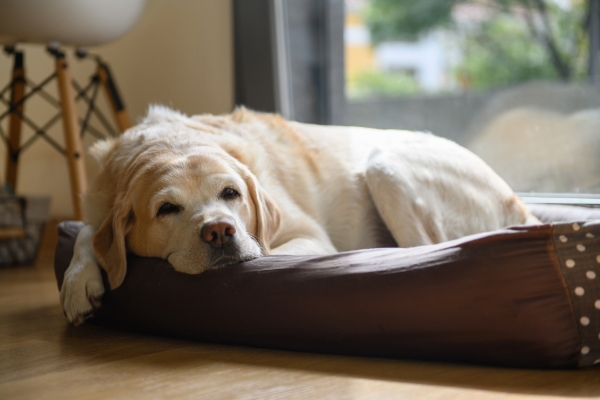
- Provide a soft, supportive bed in a comfortable location
- Keep food, water, toys and bedding easy to access
- Add rugs or carpet to slippery floors to improve grip
- Be mindful of sudden noises if their hearing or sight is declining
- Use gentle grooming time to check for lumps, bumps or sore spots
- Have their nails trimmed regularly, especially if they are less active
Growing older is a natural part of life. With a little extra care and attention, your dog can stay comfortable, supported and happy in their senior years.